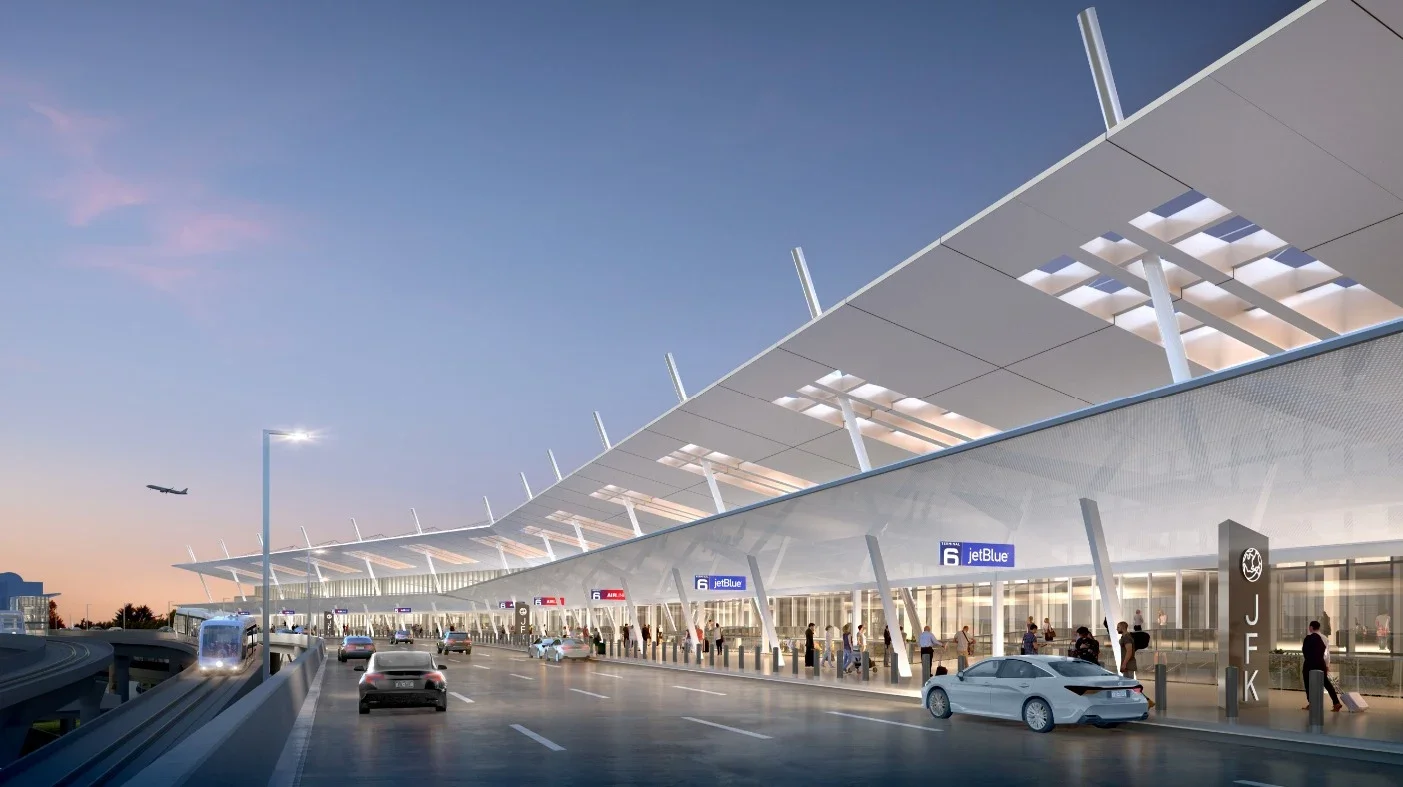
JFK Terminal 6
Architecture of Movement
Terminal 6 is conceived not as a singular object, but as a choreographed sequence of spaces shaped through movement, light, structure, and orientation. Inspired by the legacy of Saarinen’s TWA Flight Center, the project transforms the airport terminal into a civic journey organized through a series of interconnected rooms.
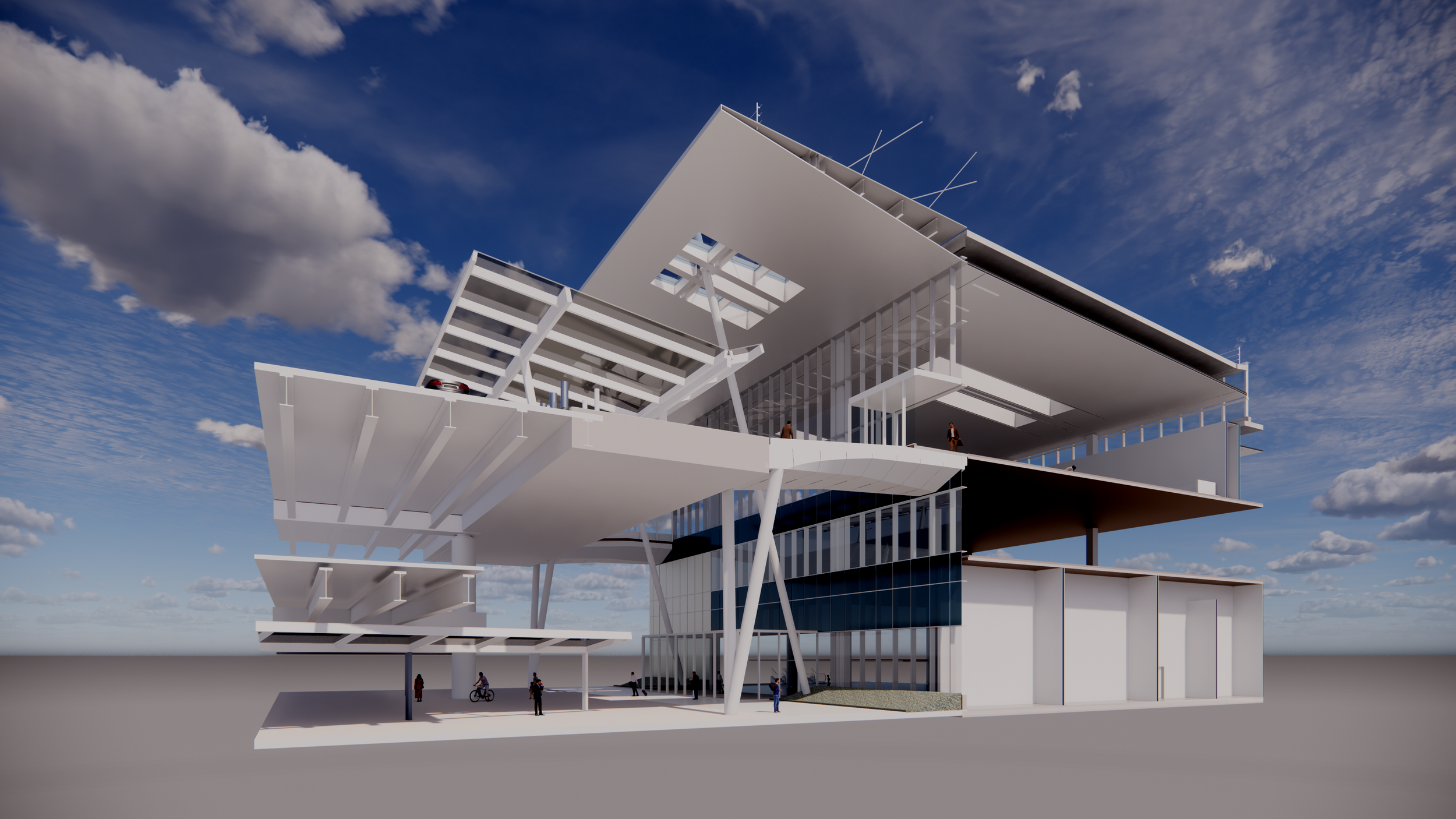
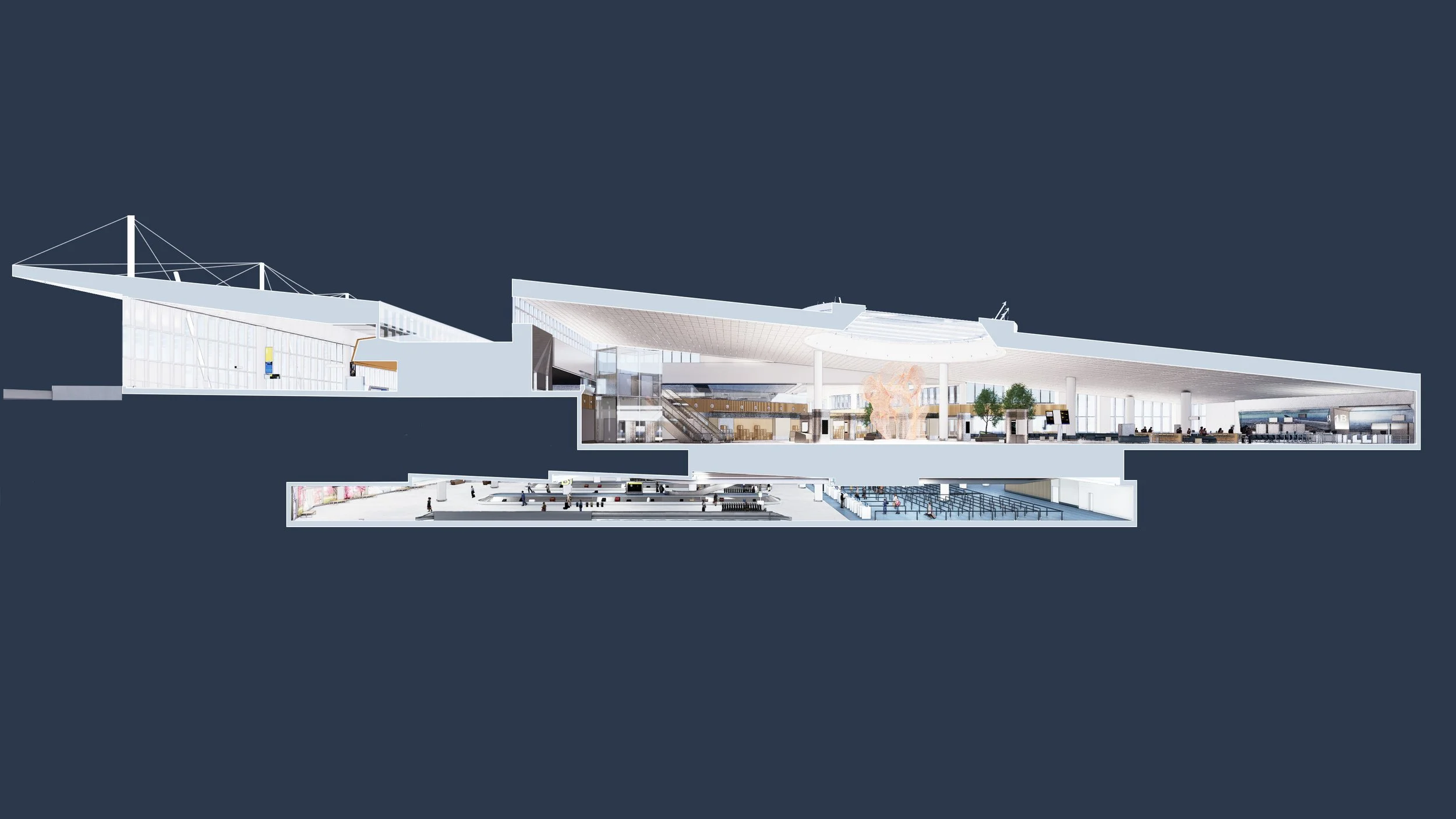
Construction Section / Wing- like Form
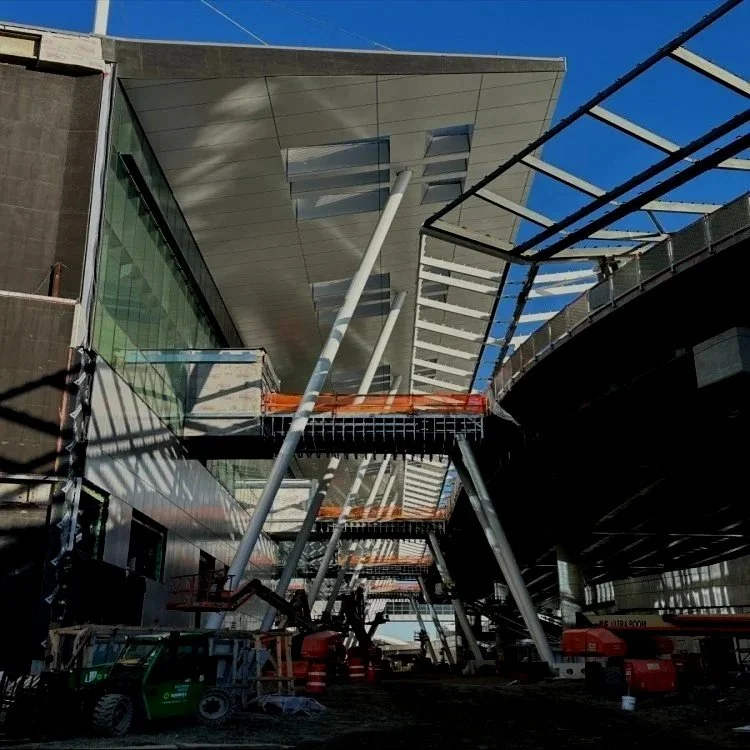
The terminal is revealed in section rather than surface — a layered composition of structure, movement, and space suspended between roadway and sky. The wing-like profile emerges not as gesture alone, but as the result of span, lift, and enclosure held in balance. Roof, floor, and circulation align into a continuous field of movement.
More than façade, the building is understood through sequence: an architecture experienced over time, unfolding as a progression of interconnected rooms.
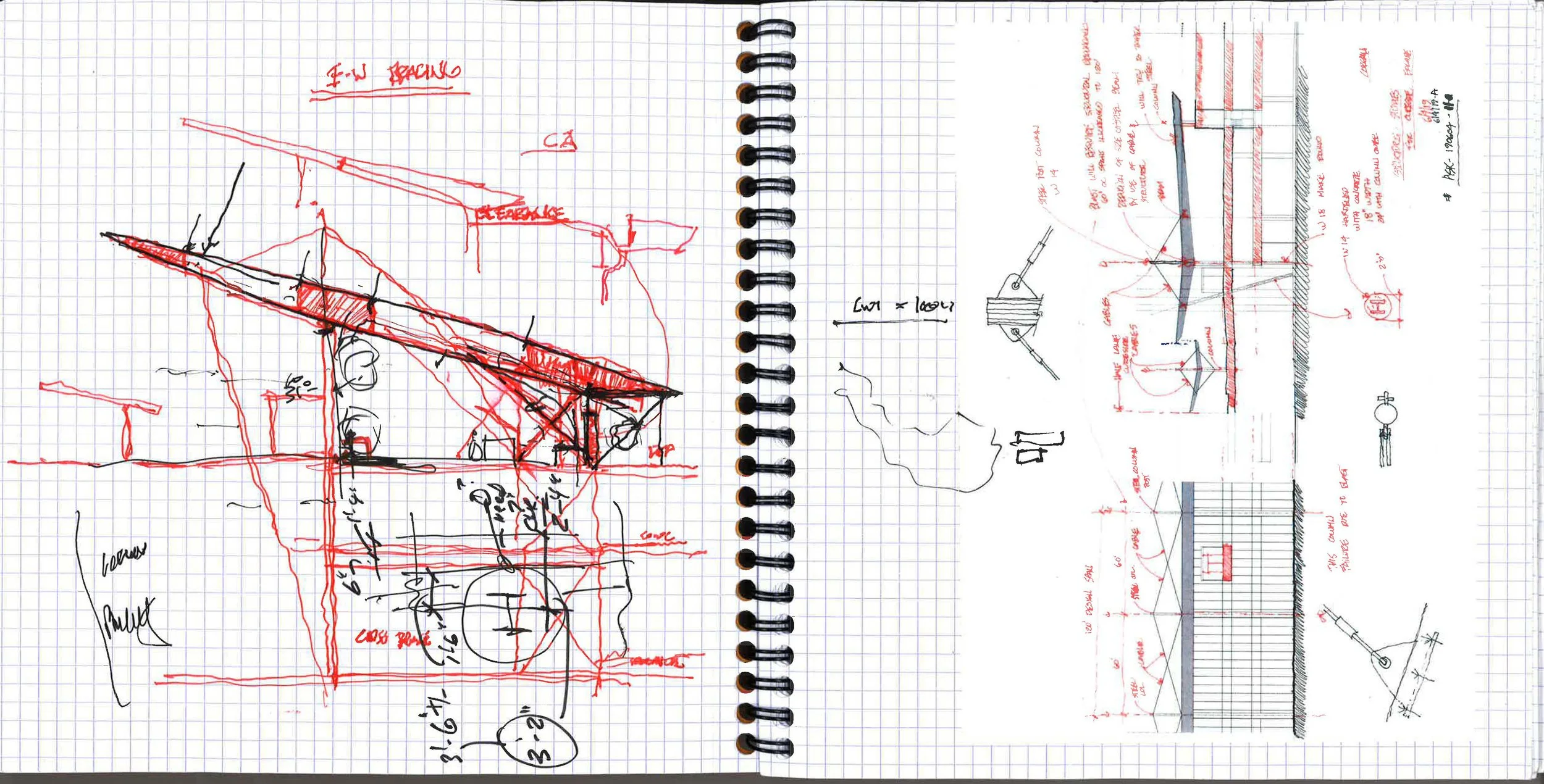
SAARINEN / TWA RELATIONSHIP
Terminal 6 begins in dialogue with Saarinen’s TWA Flight Center — one of the most powerful architectural expressions of flight ever built.
Rather than replicate its form, the project extends its spirit. Where TWA captured movement in a singular sculptural gesture, T6 unfolds it through sequence, progression, and spatial continuity.
Passengers are continuously connected to sky, airfield, and movement, allowing the terminal to be experienced less as infrastructure and more as an architecture of passage.
CAMPUS / GATEWAY CONCEPT
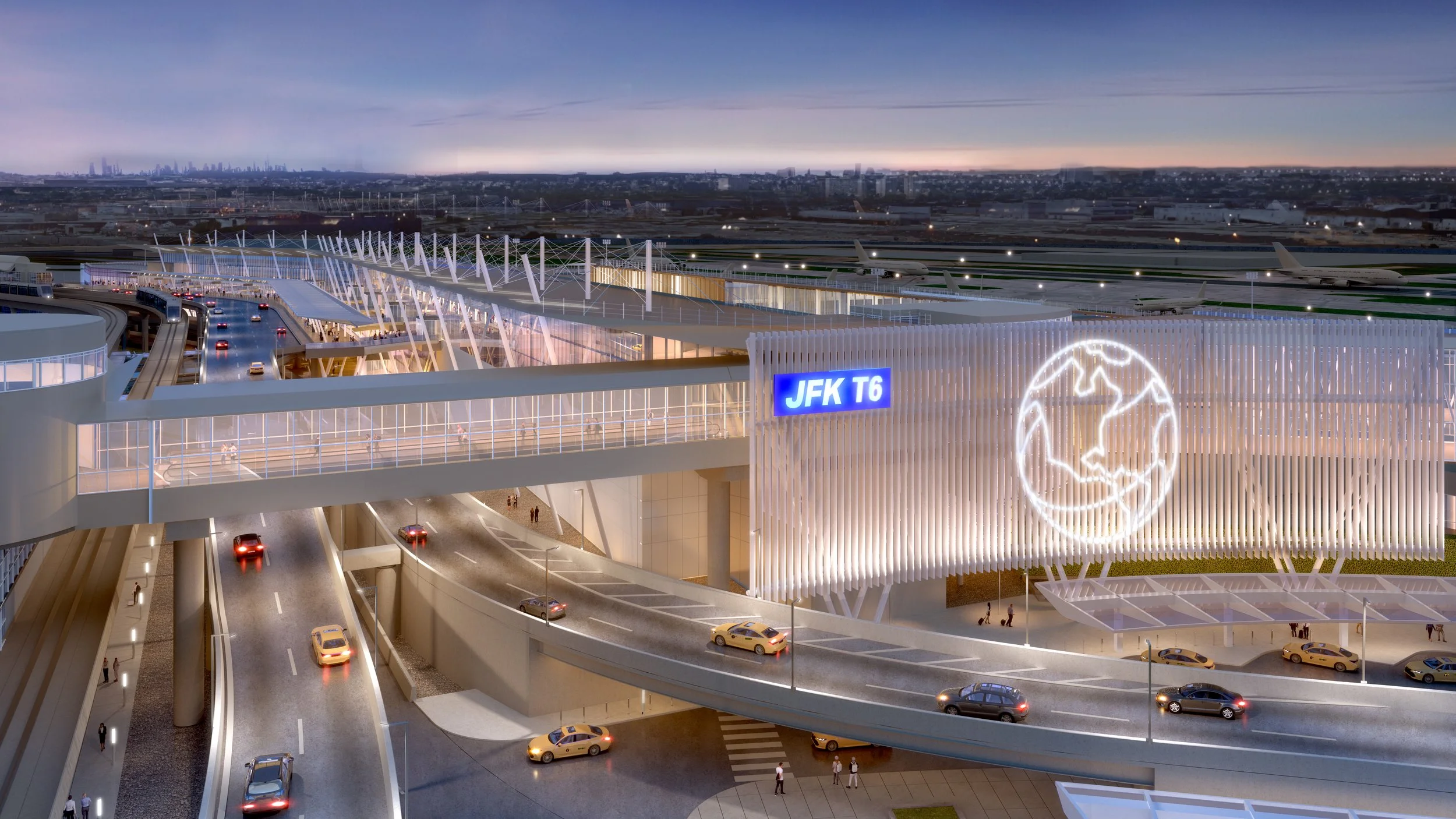
The terminal is approached as a civic threshold. A screen wall marks the edge of the site, filtering the transition between airport infrastructure and passenger experience.
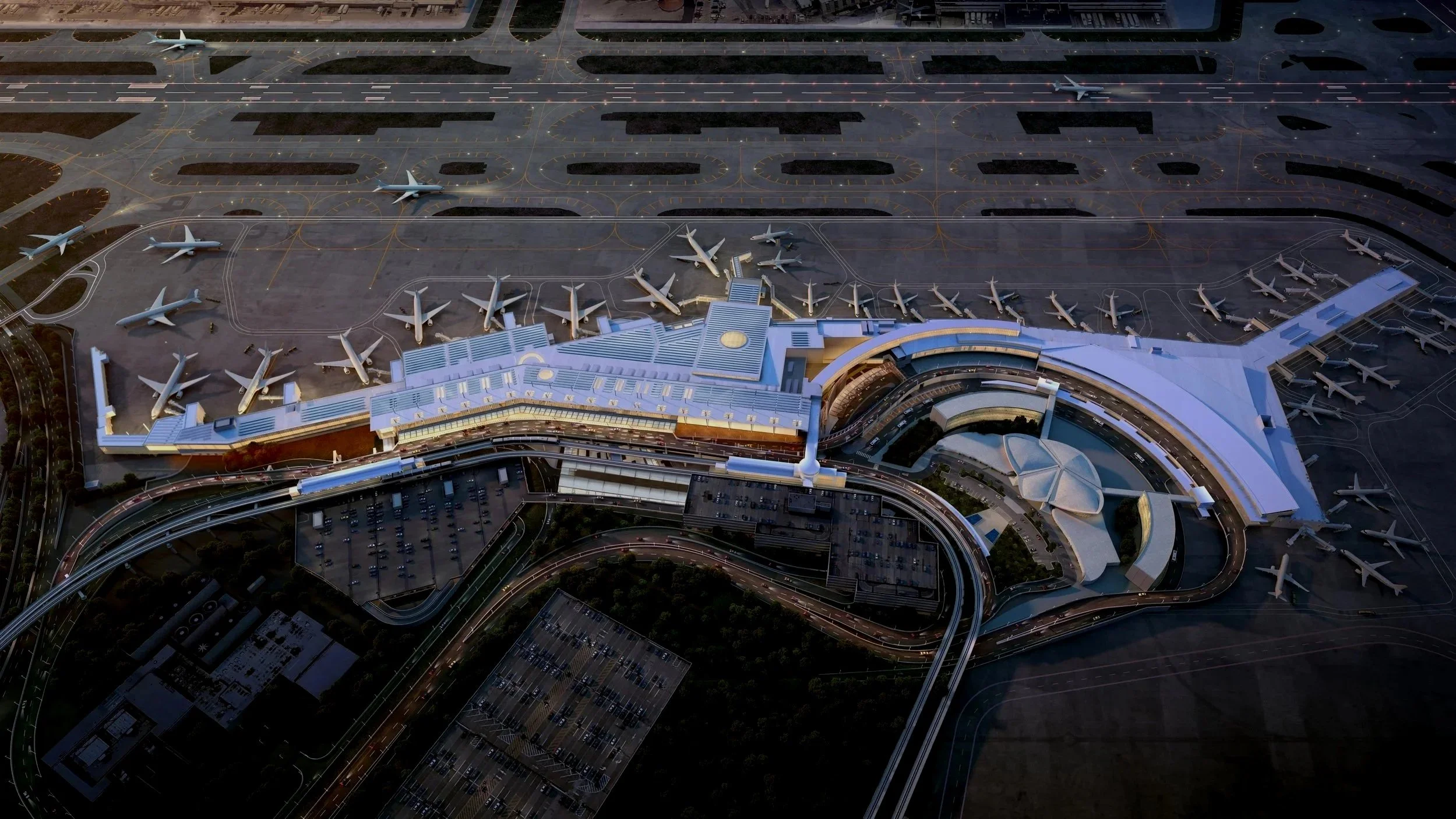
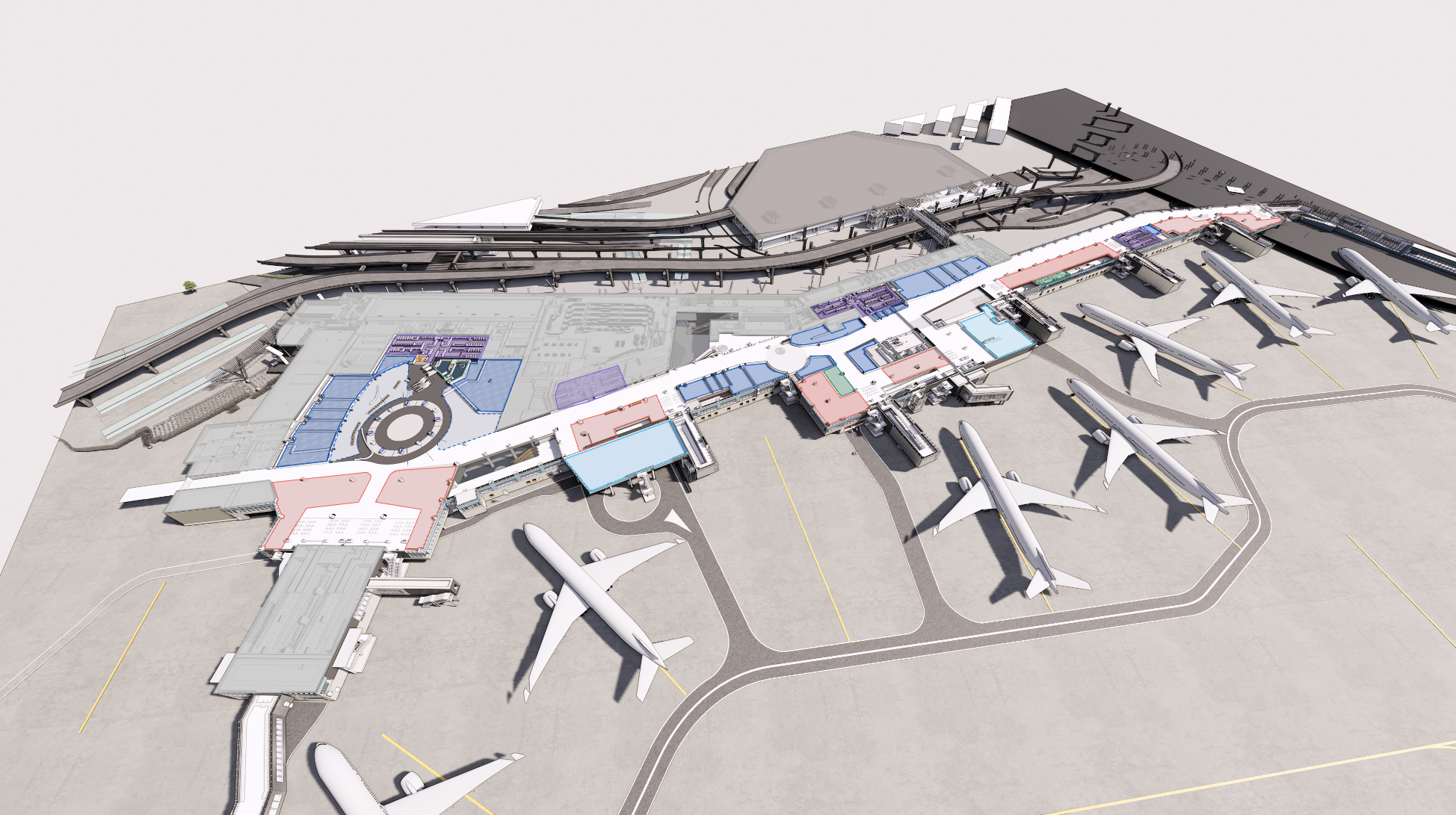
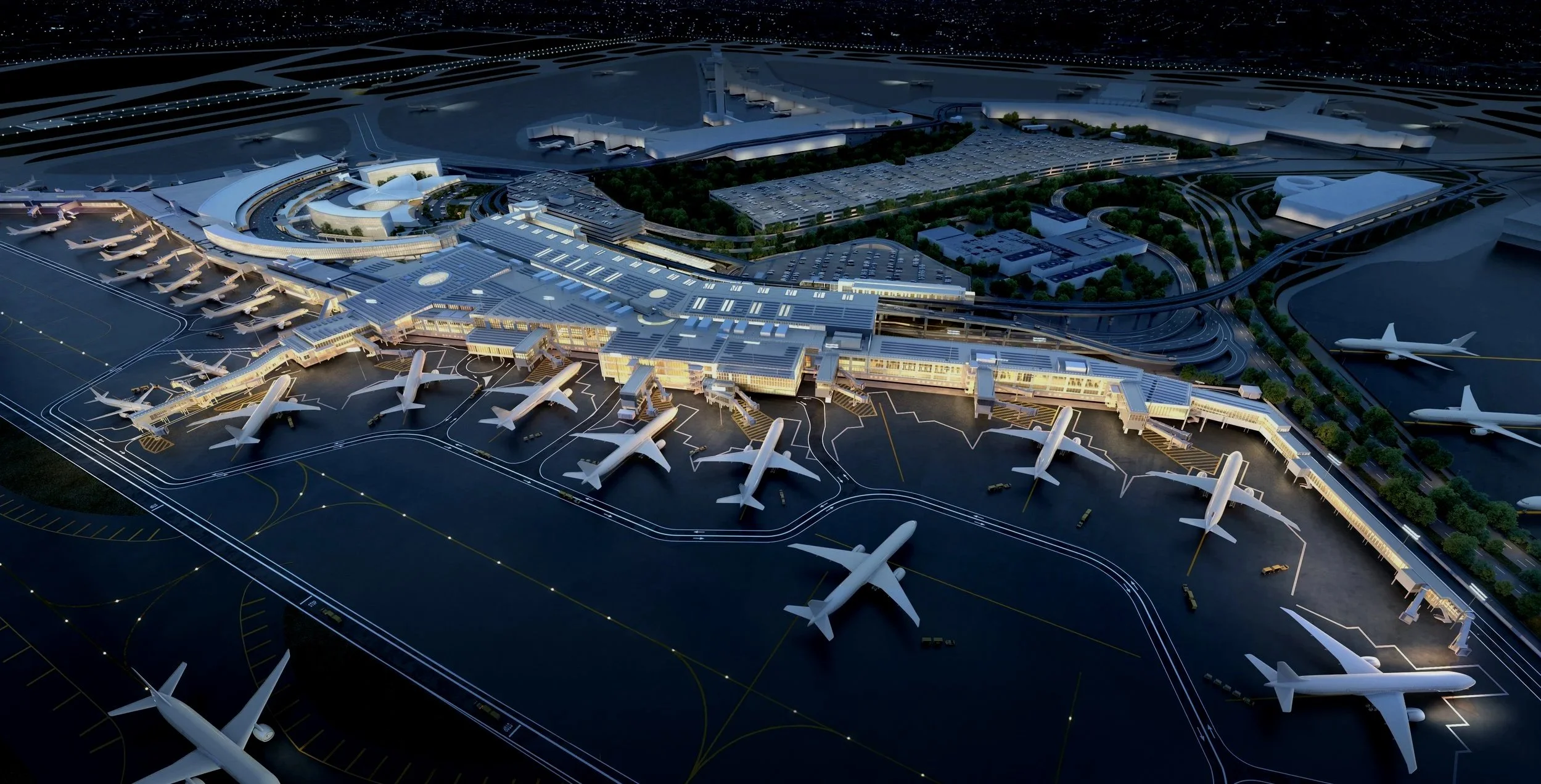
From above, Terminal 5, T6, and the TWA Flight Center form a connected campus organized through movement, orientation, and open space.
Conceived as a bridge between city and airfield, the building links multiple flows within a single continuous framework — transforming arrival and departure into part of the architectural experience itself.
BUILDING ORGANIZATION
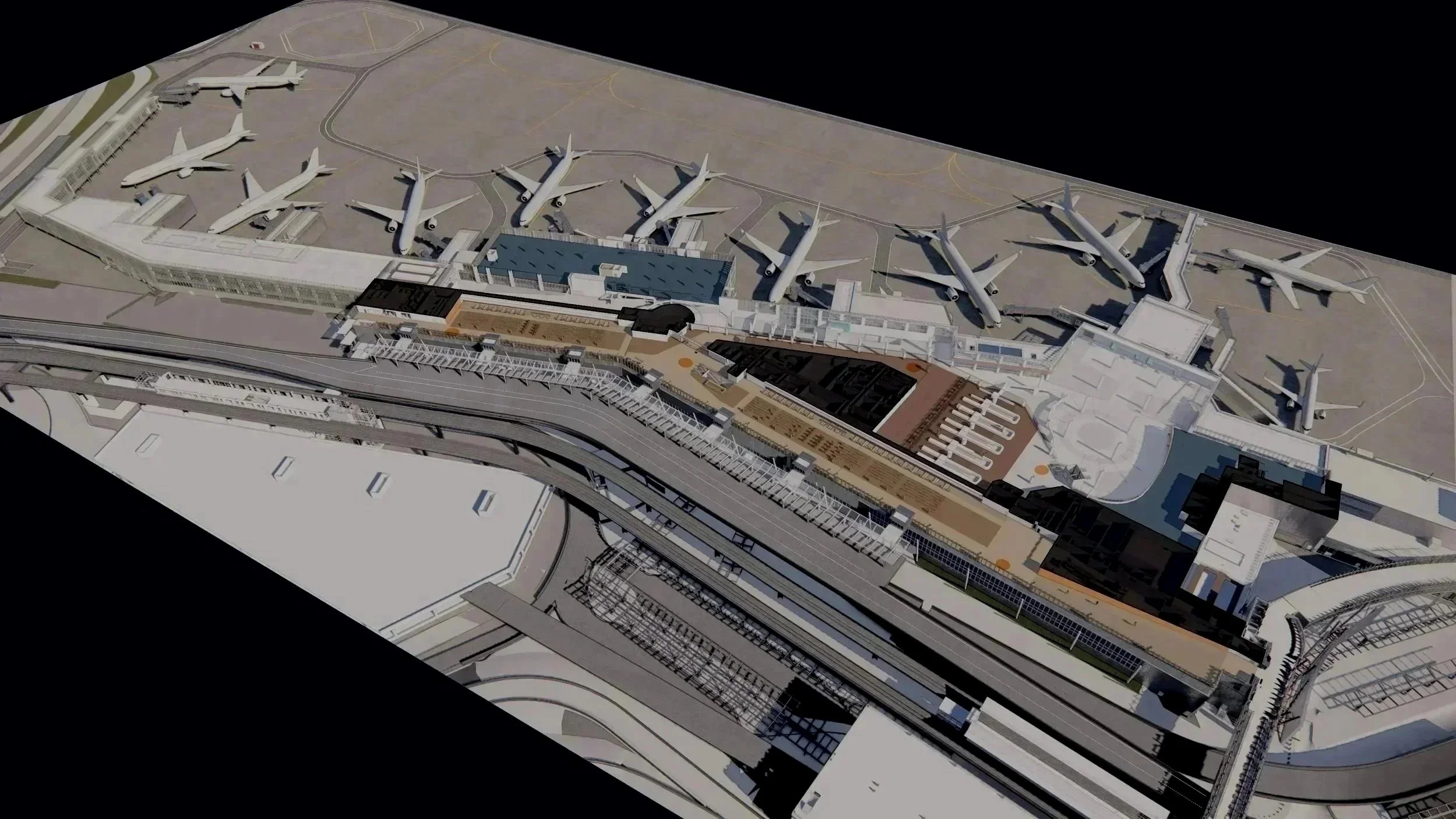
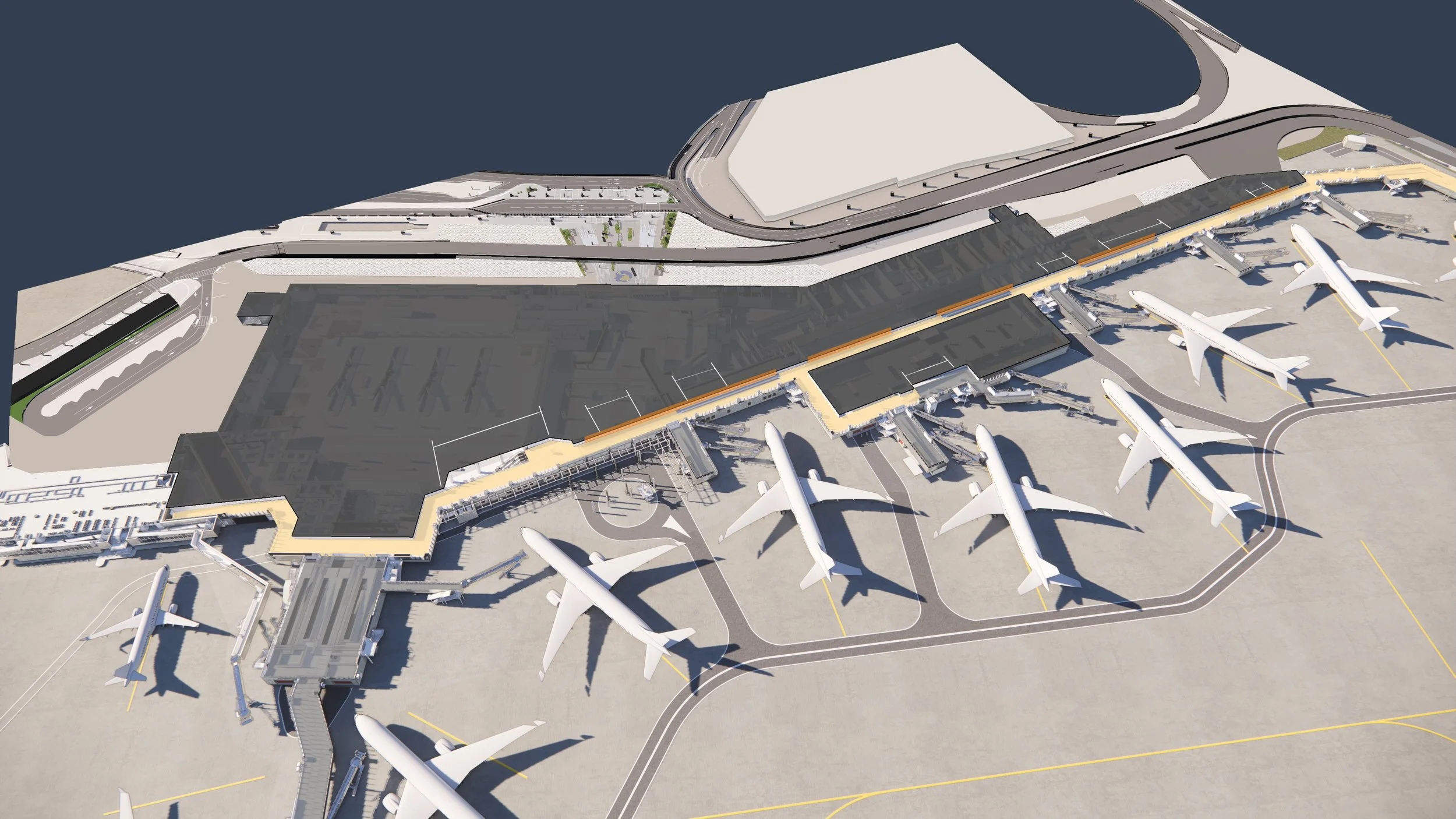
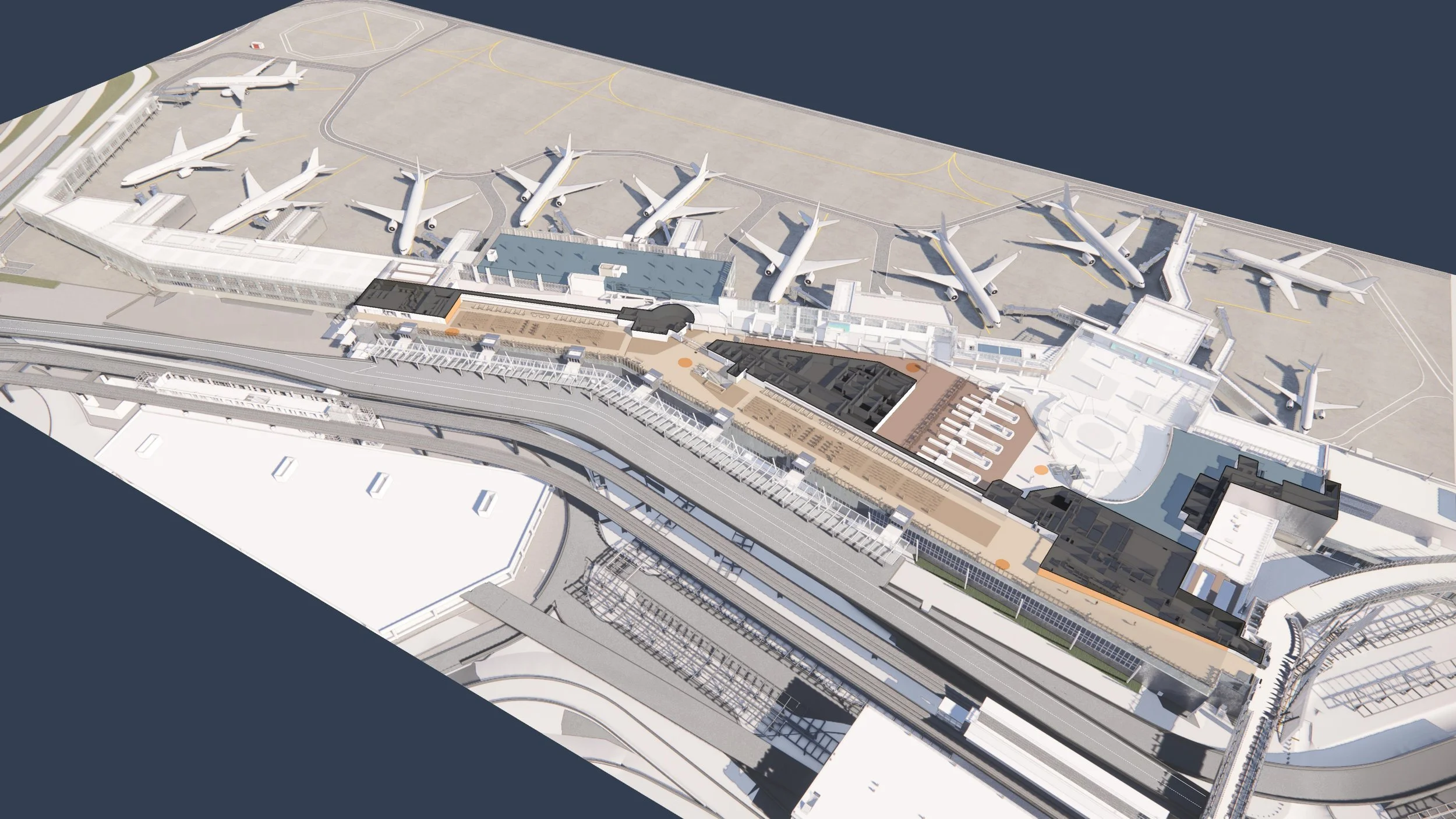
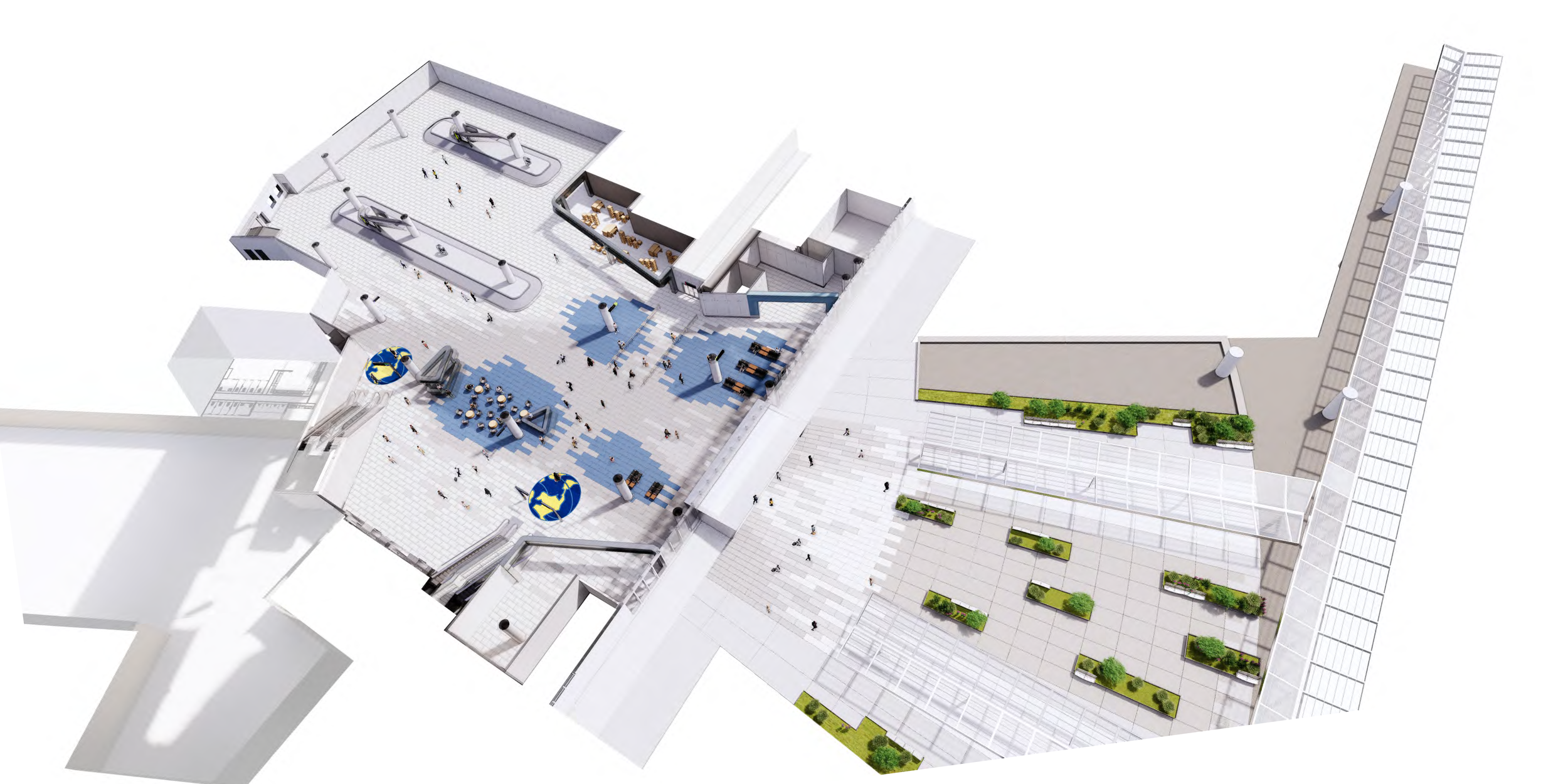
The building is organized through three interconnected layers: Departures above, Concourse at center, and Arrivals below. Rather than functioning as isolated floors, the plans operate as a continuous spatial sequence connected through bridges, escalators, oculi, and long visual corridors.
This layered organization becomes the framework for the terminal’s “Nine Rooms” — a progression of spaces guiding passengers from curbside to airfield and ultimately back to the city.
Third Floor Plan - Departures
Second Floor Plan - Concourse
First Floor Plan - Arrivals
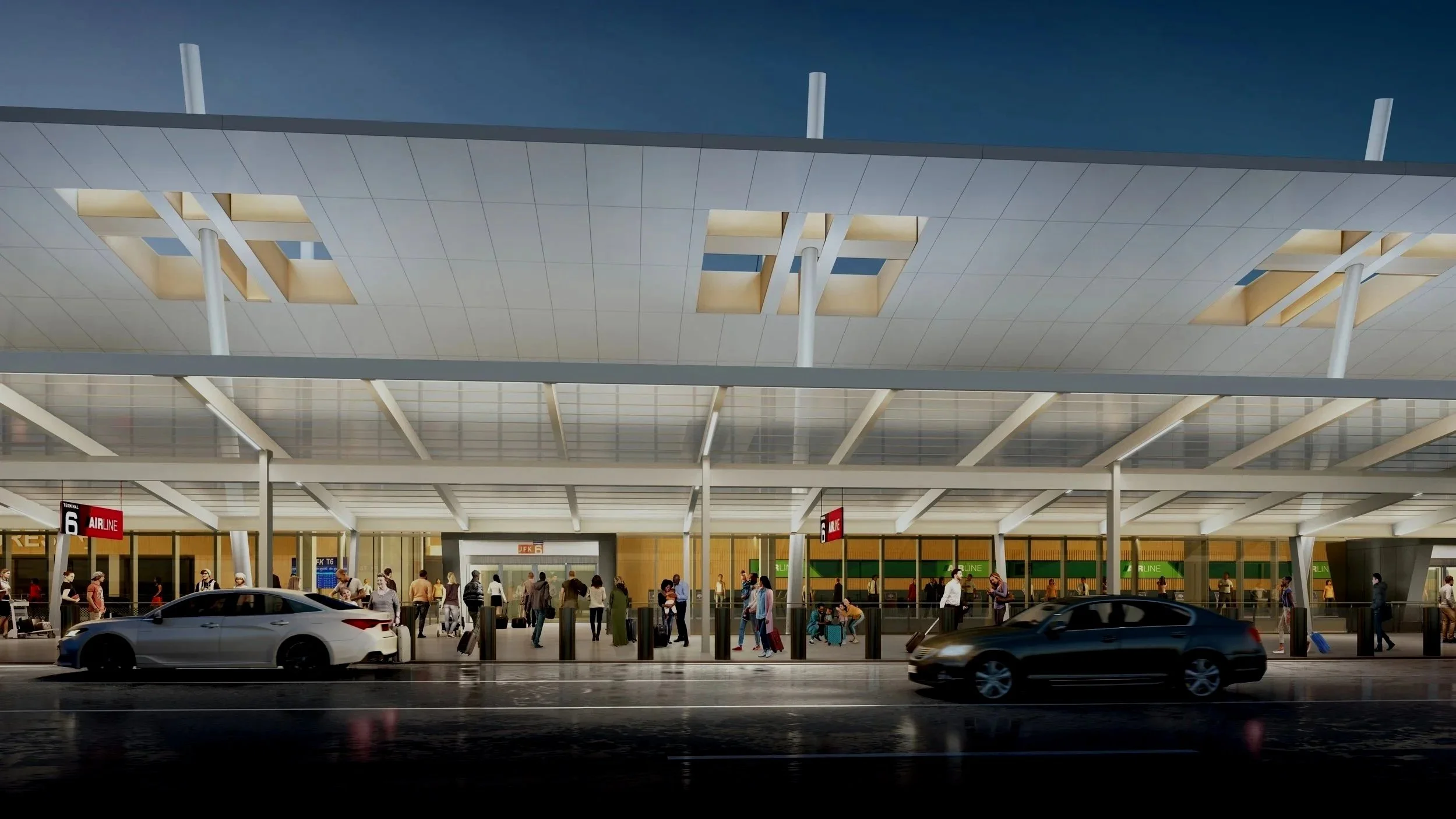
ROOM 1 — DEPARTURES
Departures begins at the curb. Roof, roadway, canopy, and hall merge into a single continuous room where movement toward flight begins beneath a lifted field of structure and sky.
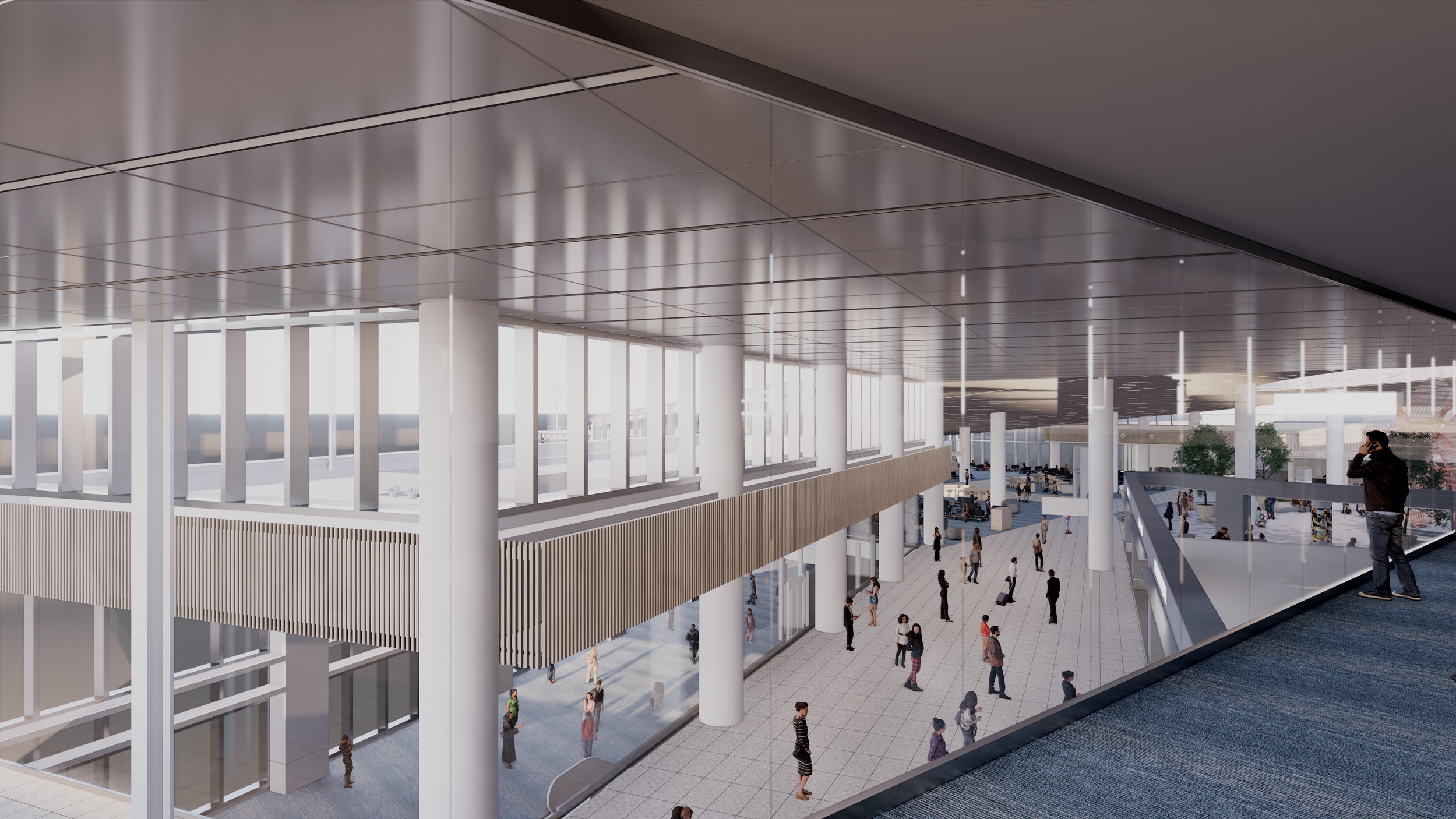
ROOM 2 — SECURITY / SSCP
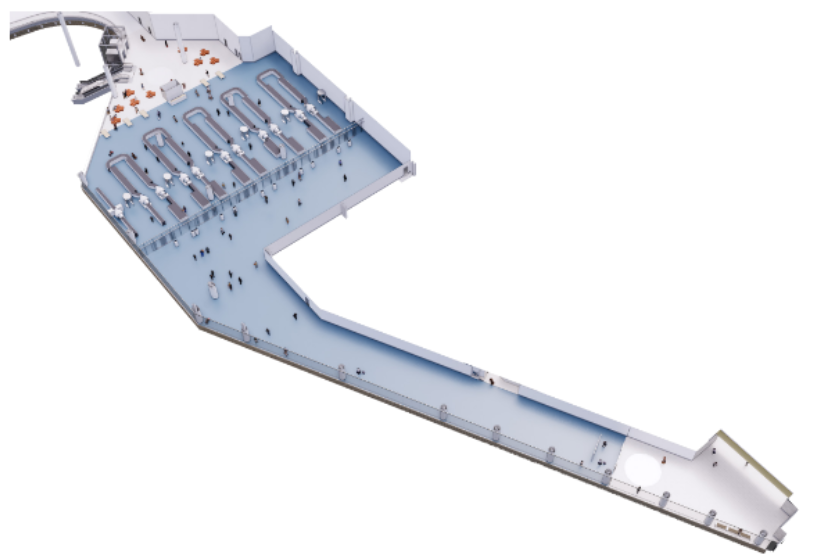
The security checkpoint overlooks the airfield, transforming a typically compressed moment into one of orientation and visual release.
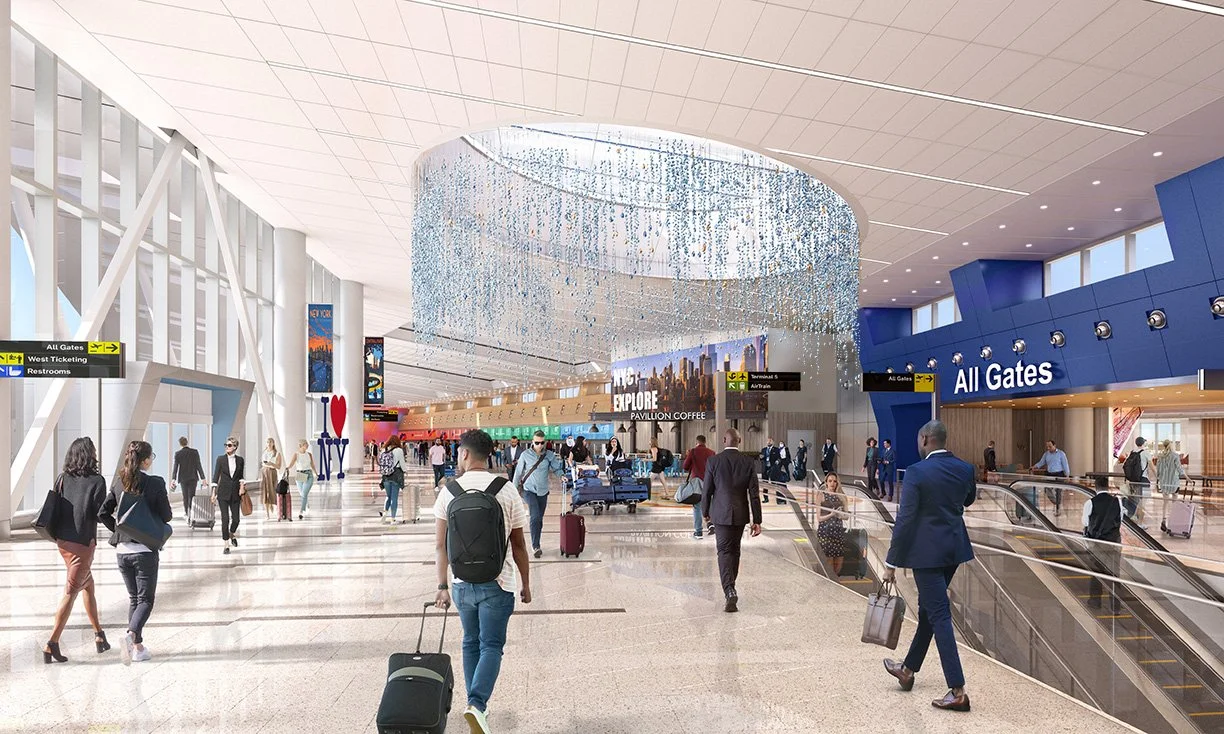
ROOM 3 — EAST HALL
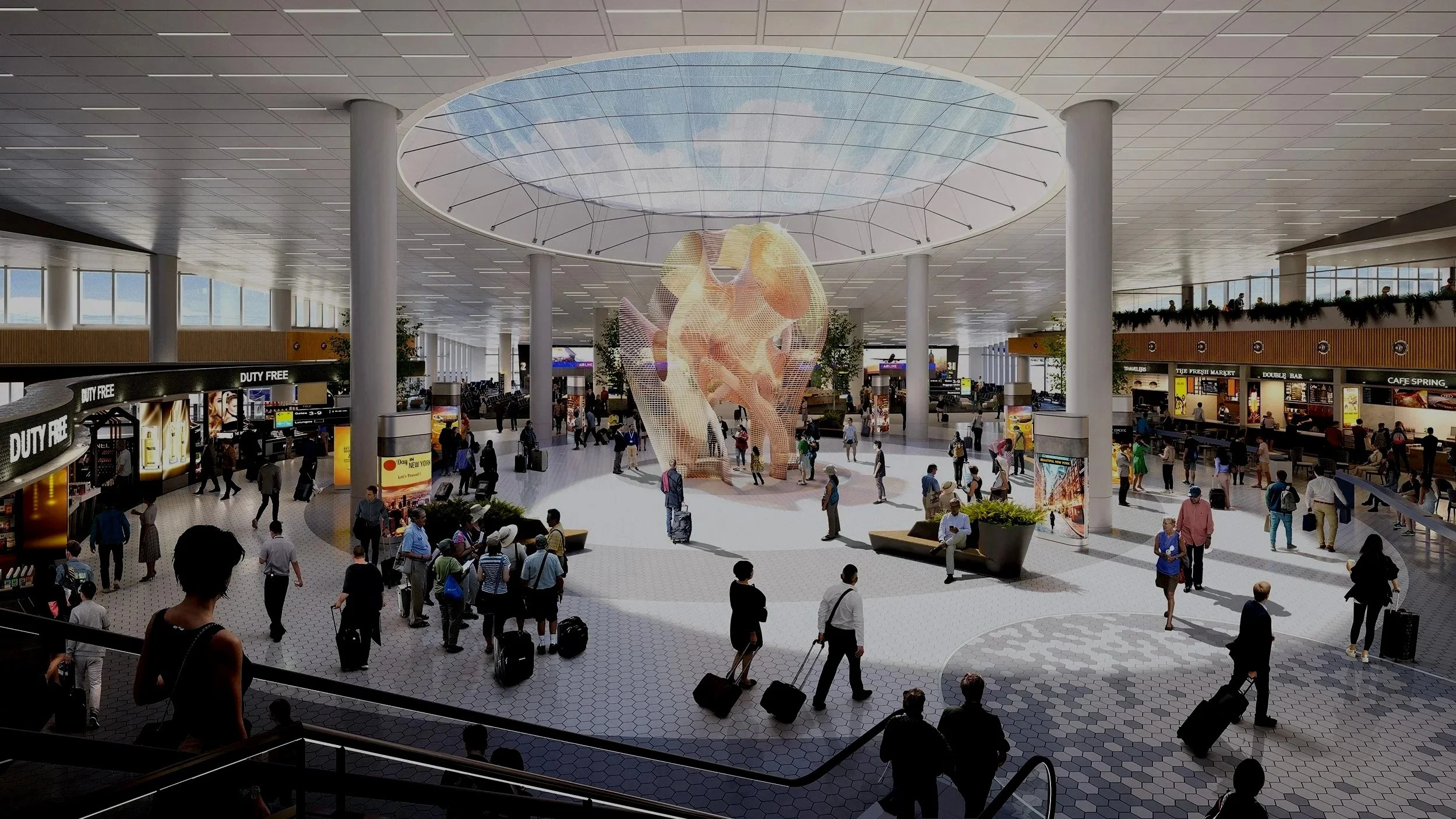
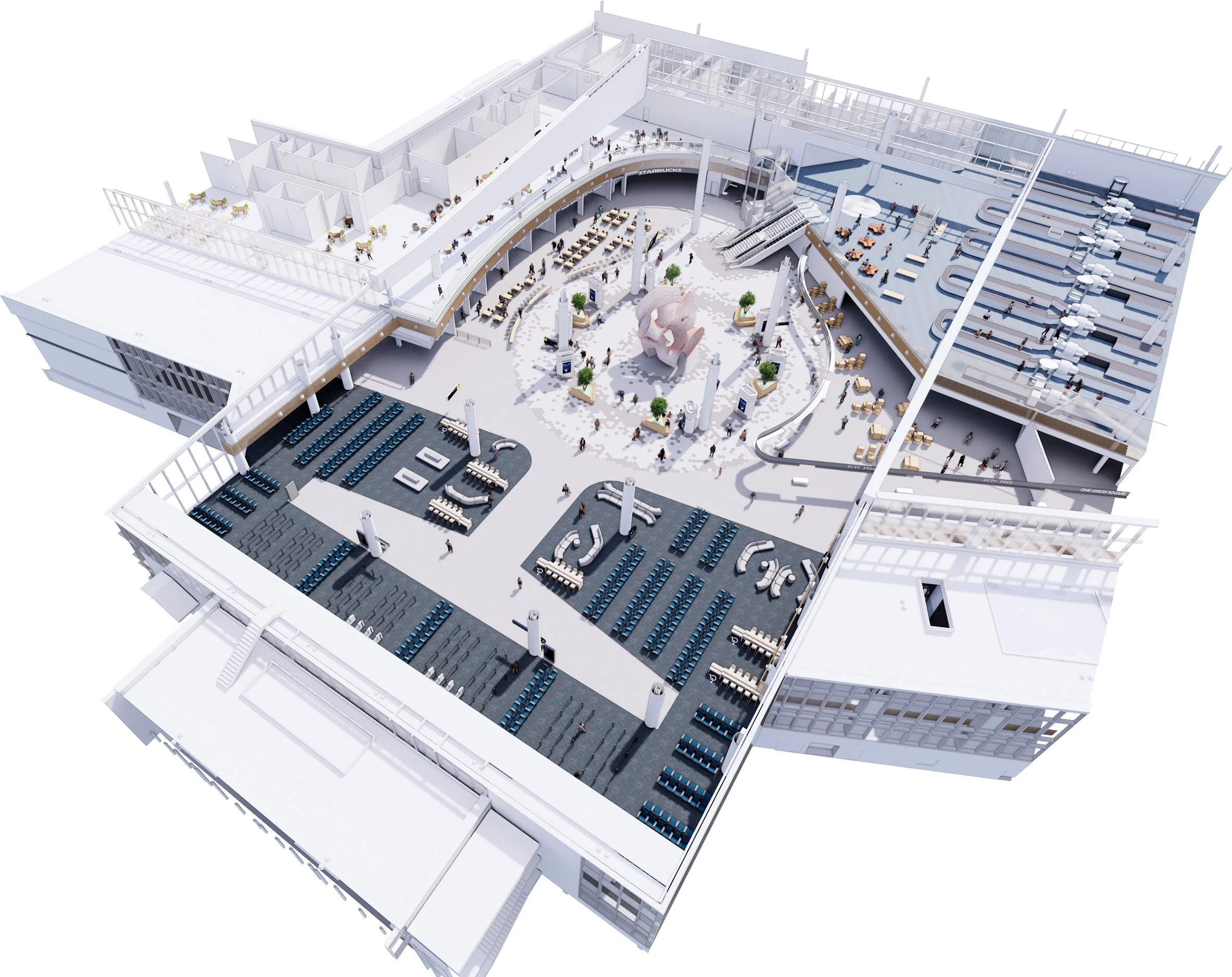
The East Hall forms the civic heart of the terminal — a luminous interior piazza organized beneath a large oculus and sloped roof plane.
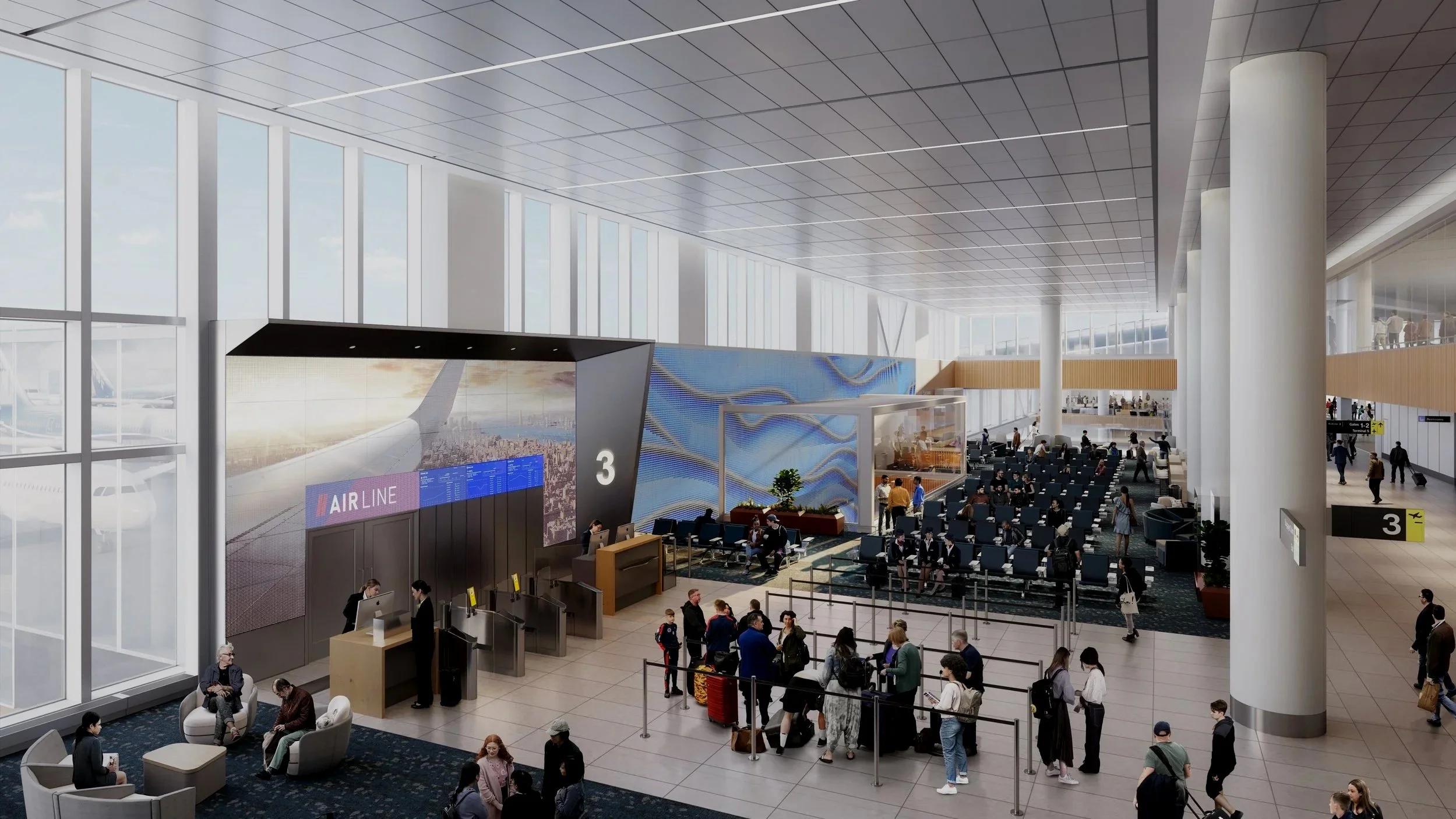
ROOM 4 — CONCOURSE
The concourse balances movement and pause, extending passengers toward the gates through a sequence of views, amenities, and connections to the airfield.
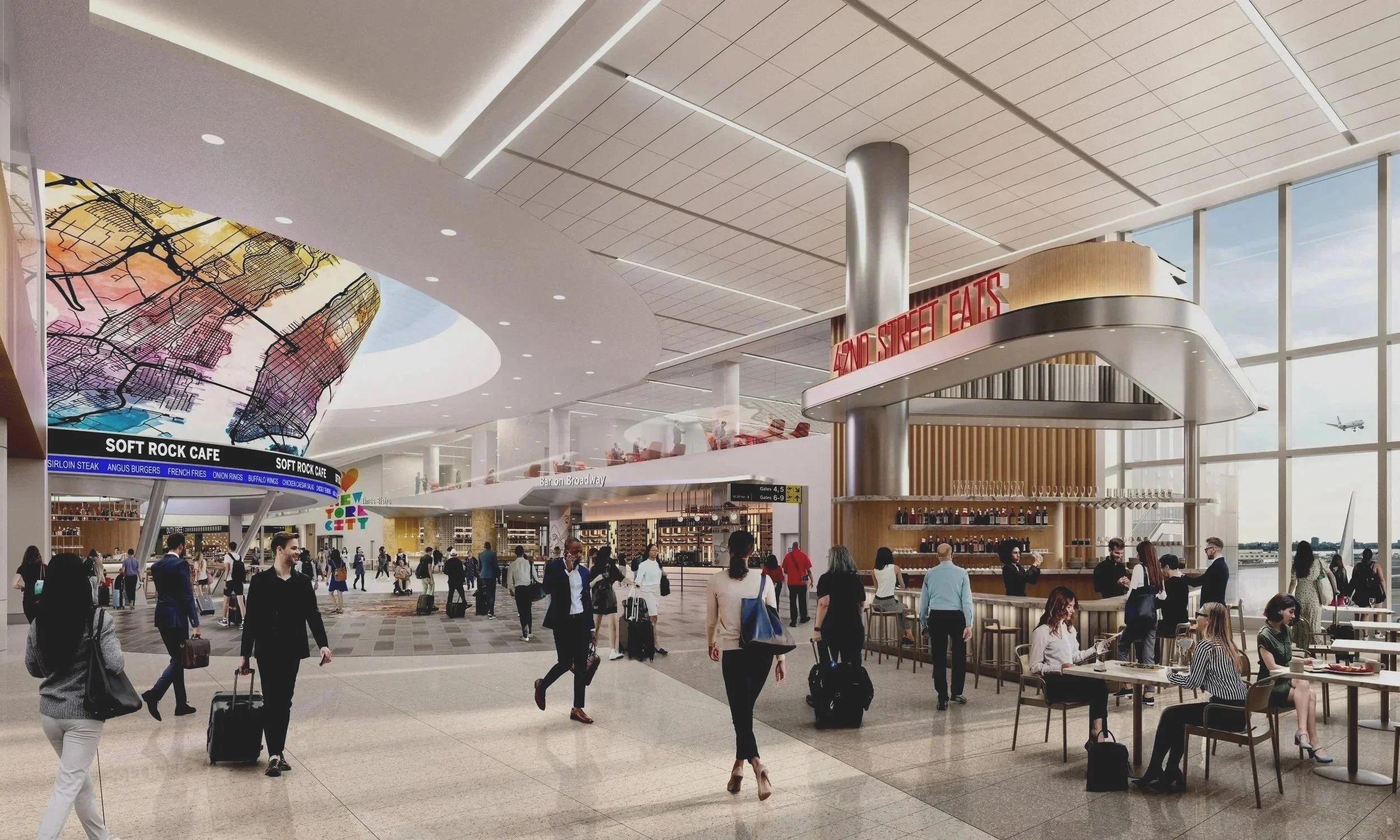
ROOM 5 — CENTER HALL CONE
An inverted cone marks the no-reentry threshold, transforming an operational boundary into a spatial landmark — the terminal’s “Times Square.”
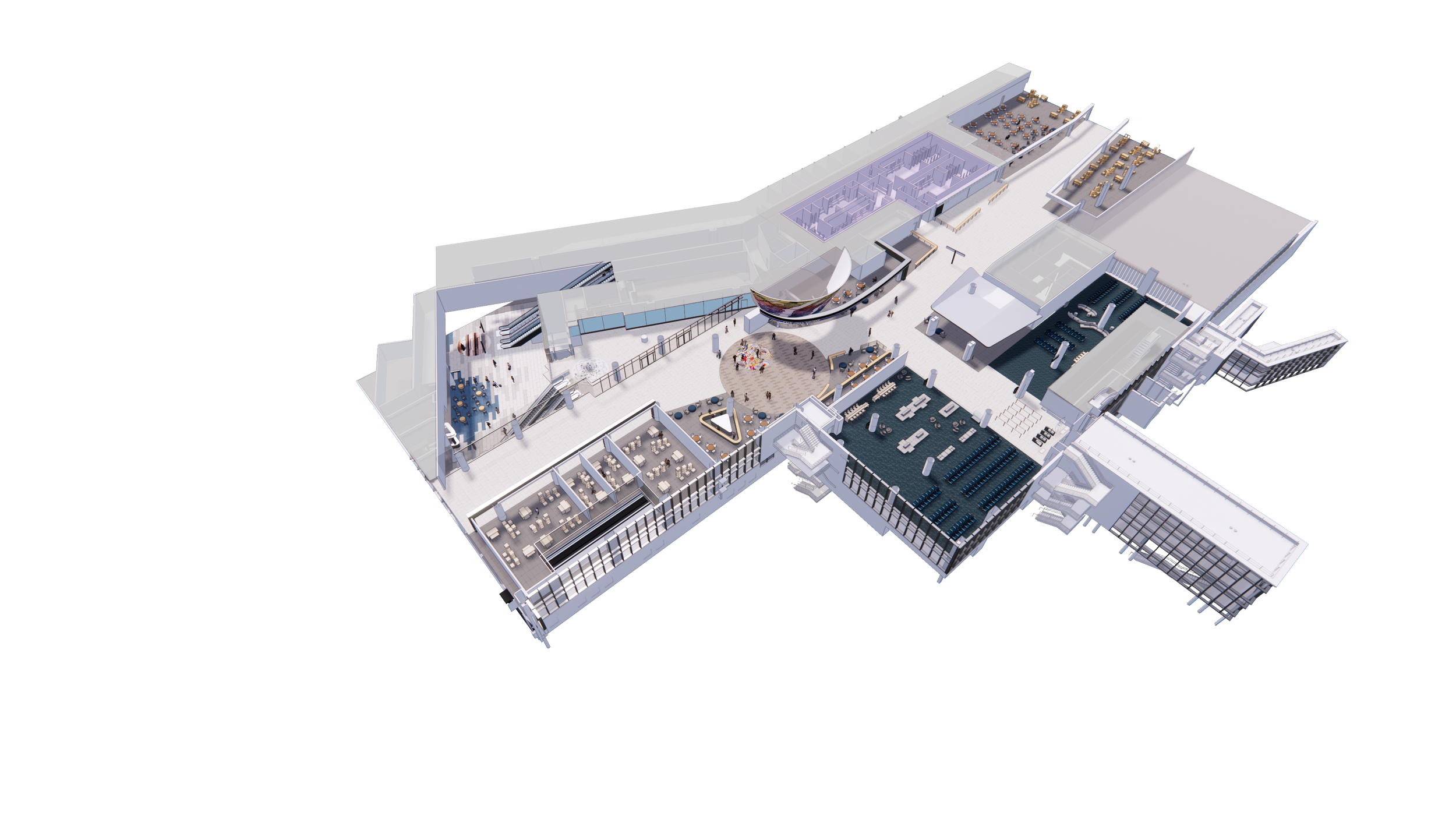
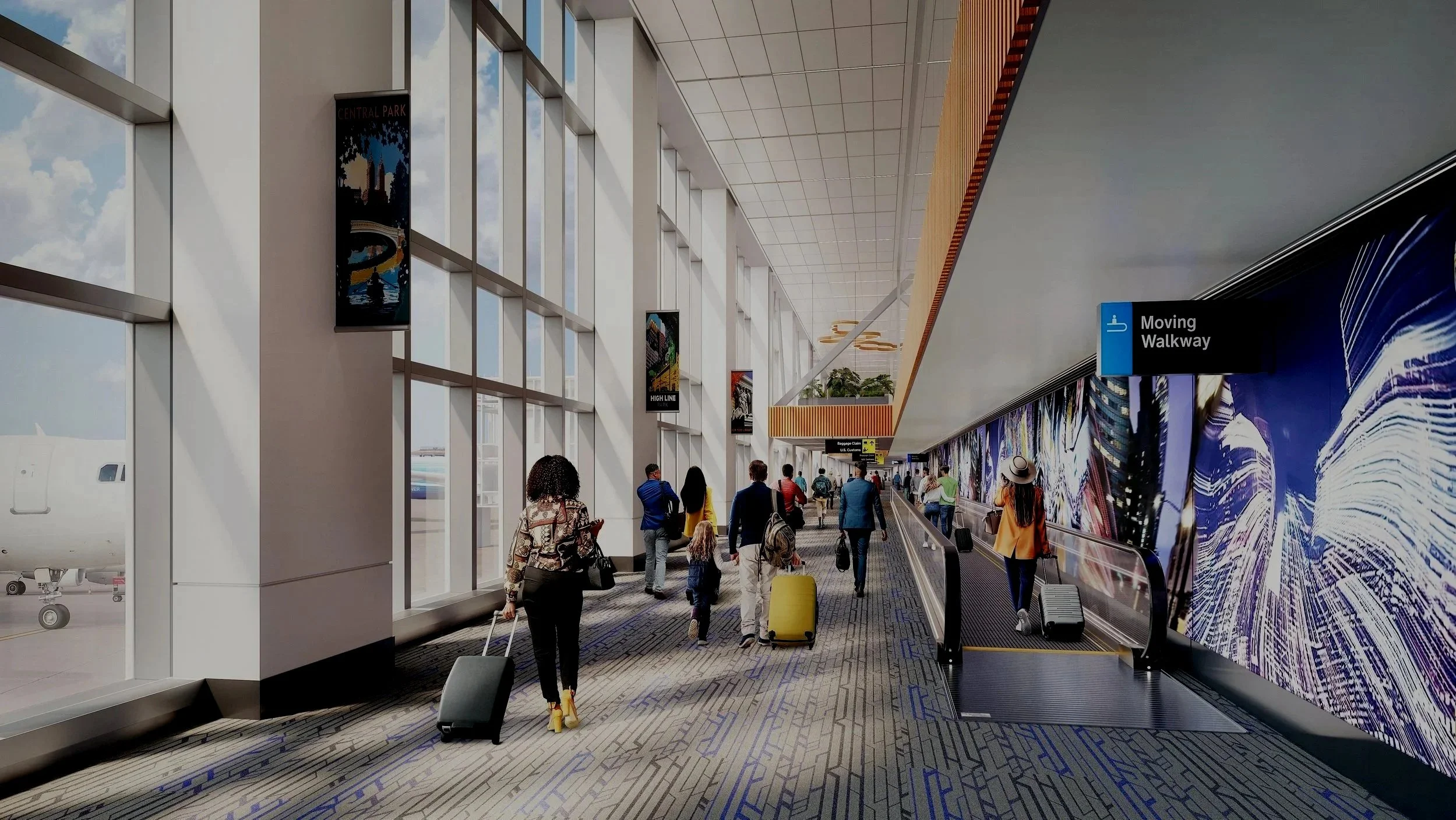
ROOM 6 — STERILE CORRIDOR
Running along the airfield edge, the sterile corridor maintains continuous visual connection to aircraft, horizon, and sky.
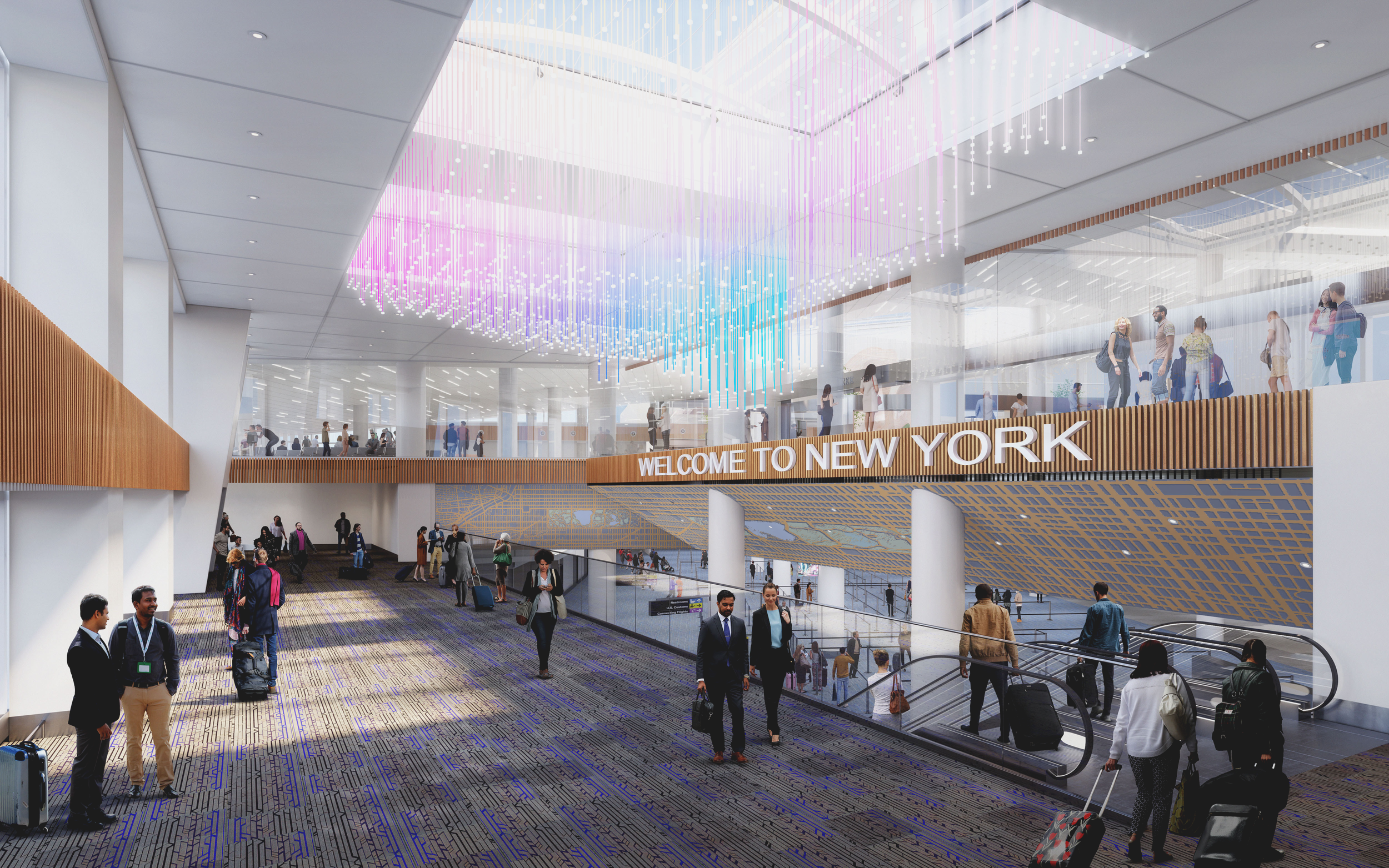
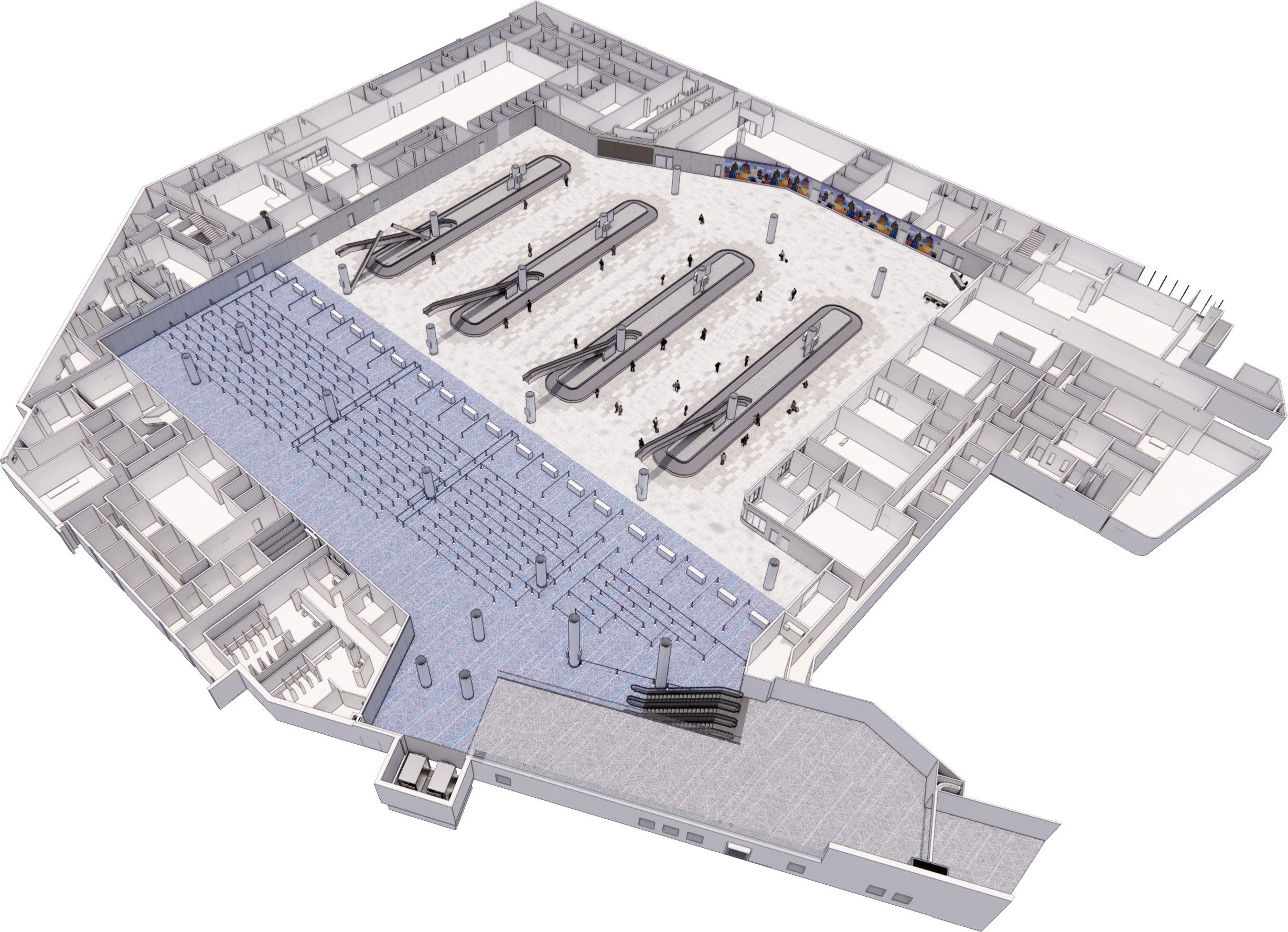
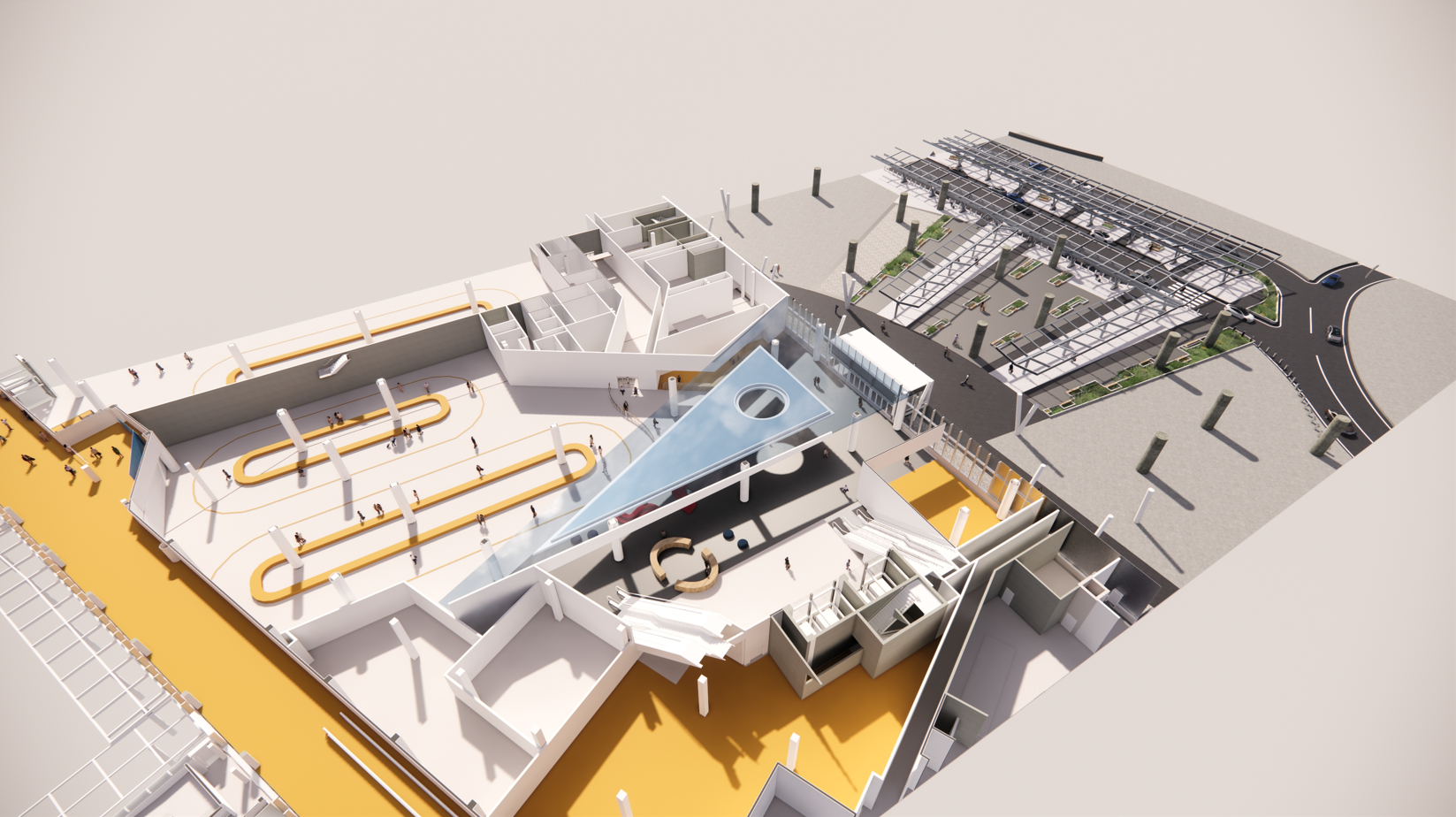
ROOM 7 — BAGGAGE CLAIM / CBP
International arrivals descend into a layered space where processing, baggage, and orientation reconnect passengers to ground and city.
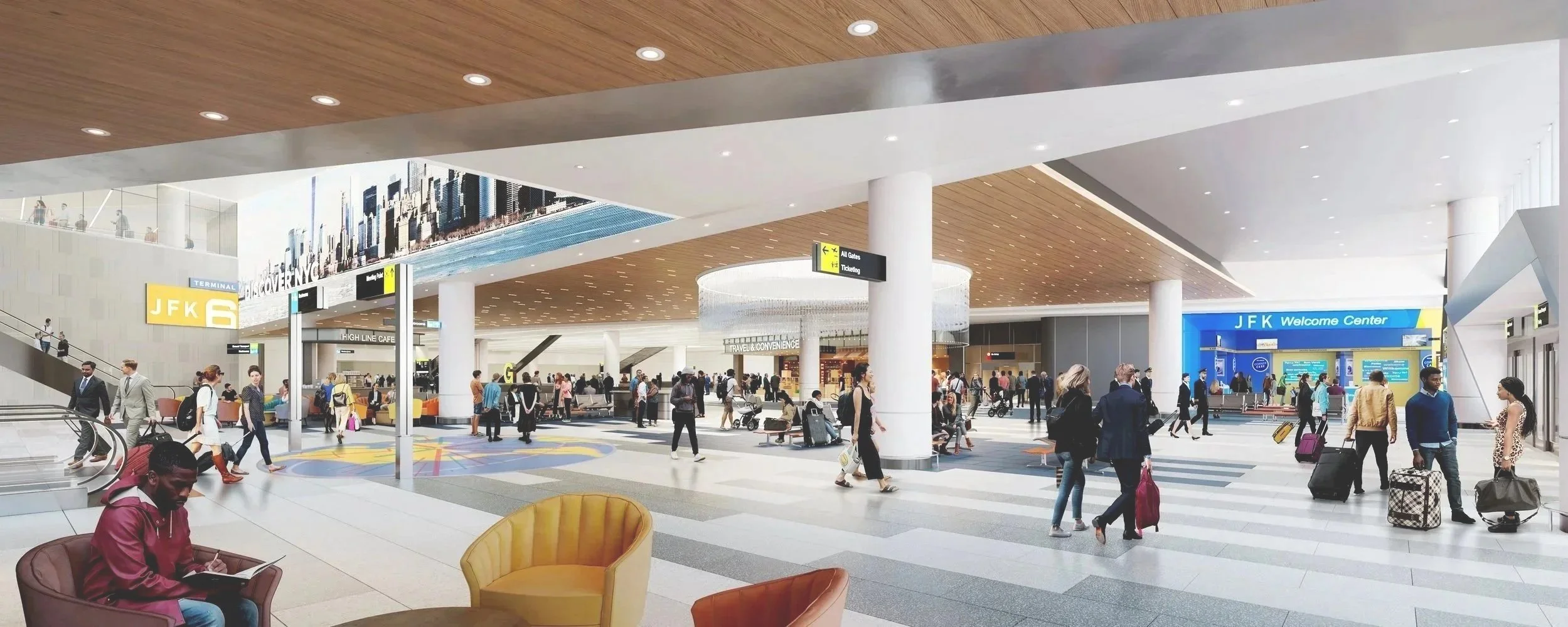
ROOM 8 — ARRIVALS HALL
Inspired by the language of the High Line, the Arrivals Hall merges interior and exterior through continuous material and landscape.
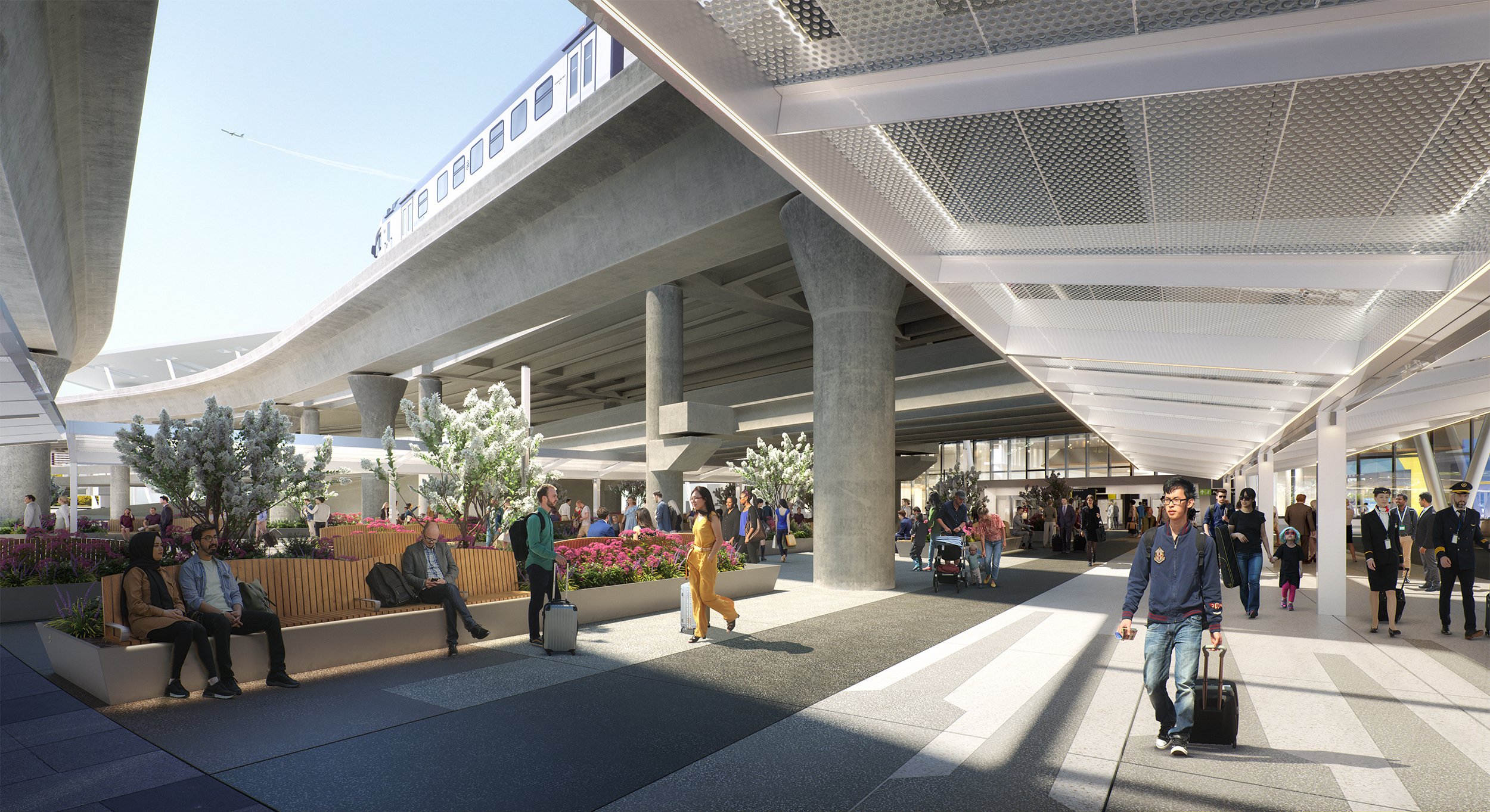
ROOM 9 — ARRIVALS PLAZA
Beneath the roadway infrastructure above, the Arrivals Plaza becomes an unexpected civic room shaped by structure, light, and movement.
SUMMARY / CLOSING
The nine rooms of Terminal 6 transform the airport journey into a continuous architectural sequence.
Each room is defined by its own relationship to light, structure, movement, and view, yet together they form a cohesive experience unfolding from departures through arrivals.
Inspired by the legacy of flight architecture yet shaped by the complexity of the contemporary airport, Terminal 6 becomes less a singular building than a choreographed civic journey — an architecture understood through passage, progression, and the experience of movement itself.